Végélandia
Végélandia is a serious game designed entirely by Da Viking Code for Vitagora, the French competitiveness cluster dedicated to food and health. Running on the tablets of the Lab, it turns three educational modules - naturalness, fermentation and manufacturing - into a genuine game adventure, built for a family audience.
A storyline that gives players an immediate goal
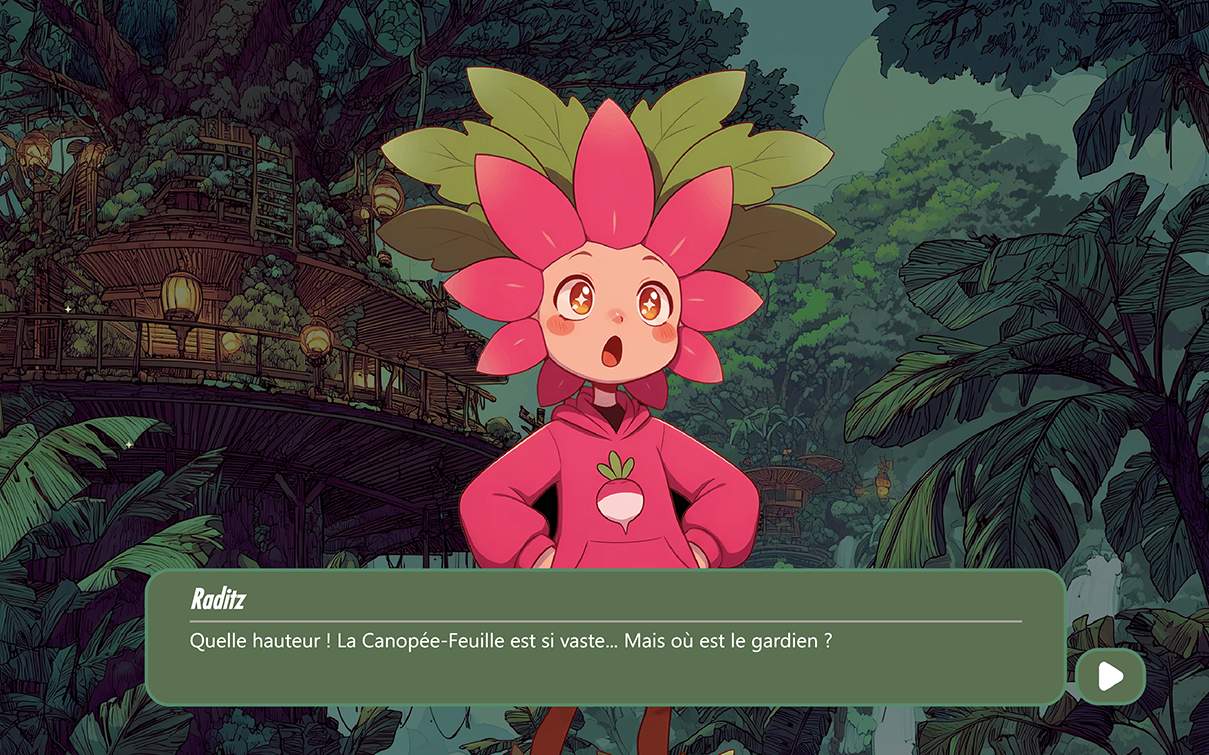
Every spring, the Great Banquet of Living Flavours is meant to wake Végélandia. But the Crunchy Codex, the kingdom's great recipe book, has lost its three key pages. Without them the banquet is in jeopardy - unless Raditz, a young radish with a soft heart and an endless curiosity, sets out to learn the fundamentals again from the three guardians of knowledge.
This opening shapes the entire storytelling of the project: the player isn't answering a plain quiz, they are on a quest to recover a lost body of knowledge. At the end of each chapter they receive a page rewritten by the guardian, along with an exclusive recipe scroll they can read on screen and take home via a QR code.

A world built from scratch
Da Viking Code imagined the complete cosmology of Végélandia: a circular garden-island born from a "Great Sourdough", three biotopes - the Leaf-Canopy, the High-Terroirs and the Florin-Marsh - and a people whose design is inspired by vegetables.
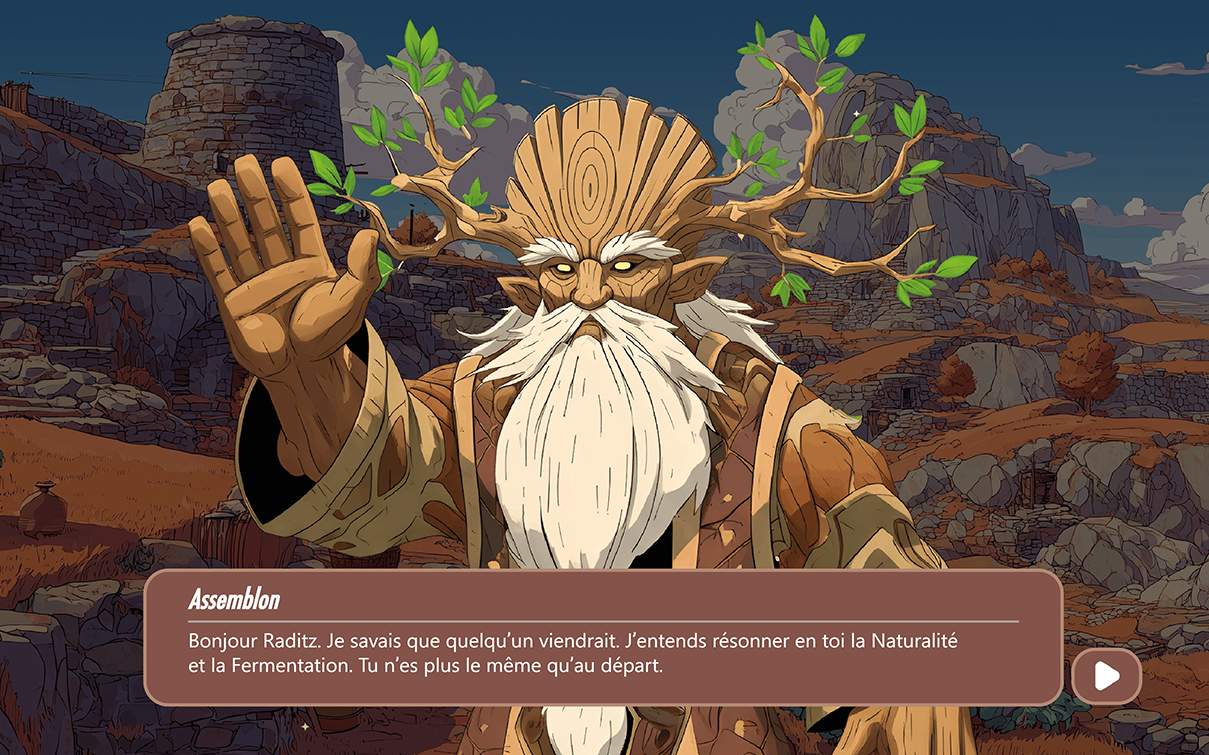
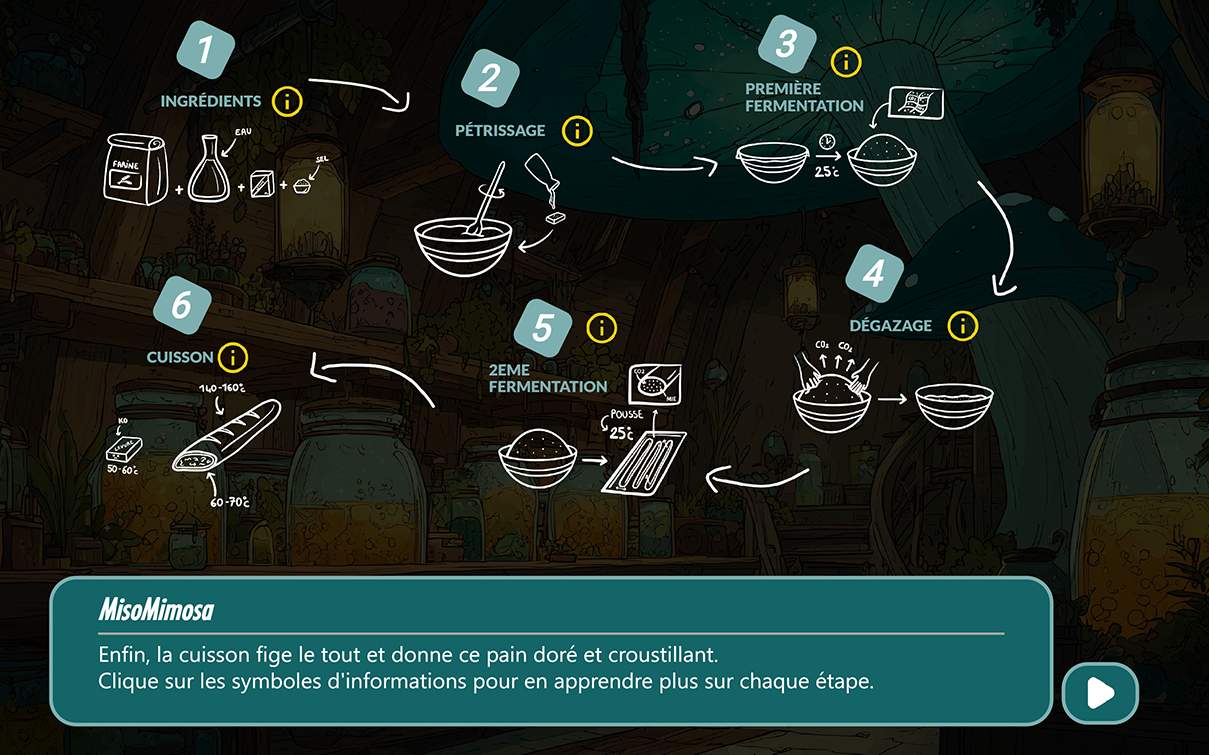
Along the way the player meets three guardians with distinctive personalities: PiccoloPois for naturalness, MisoMimosa for fermentation and the mysterious Master Assemblon for manufacturing. Plus Grappy Carotte, the living memory of this mysterious people.
Game architecture and engagement mechanics
The experience opens on an illustrated prologue in visual novel style, then the adventure begins. Between the trials that follow, dialogue sequences set the pace of the hero's progress and build involvement without adding cognitive load.
The mechanics at play:
• Linear story mode
• Quizzes built from Vitagora's educational material
• Collecting the pages in the notebook
• Rewards in the form of recipe scrolls, readable on screen and via QR code
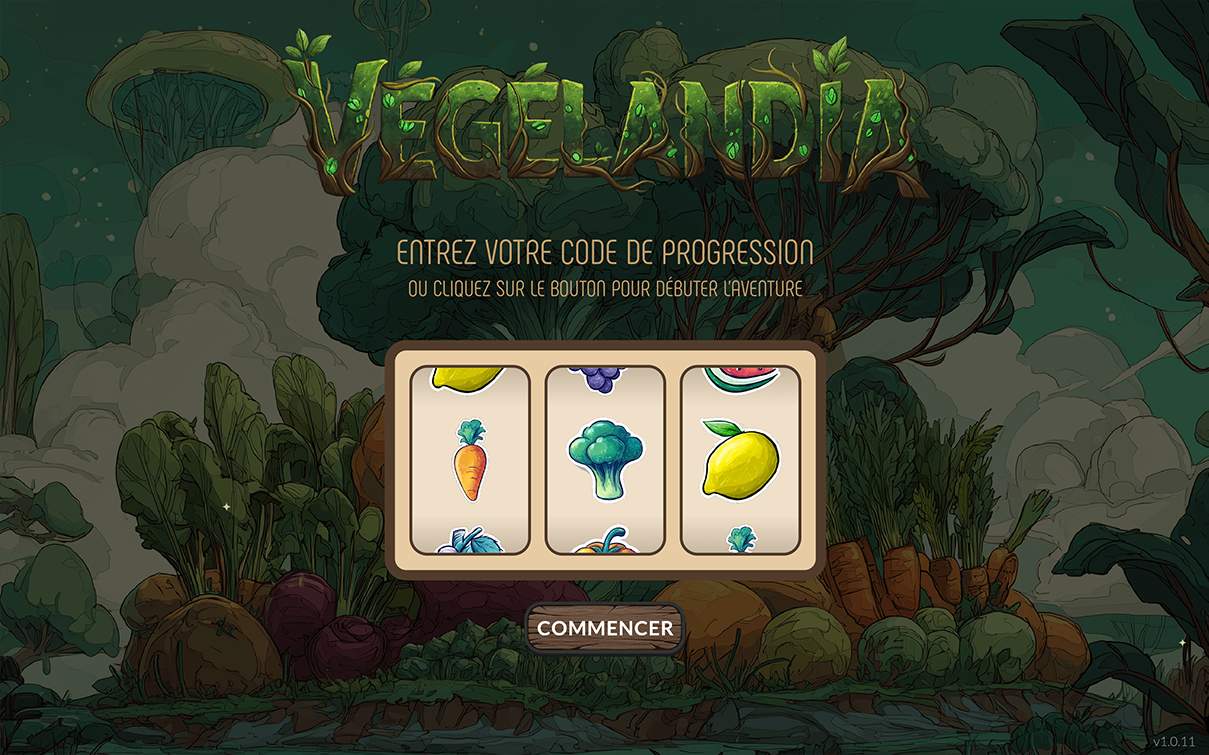
The "culinary code": an answer to visitor flow
One of the project's constraints was how visitors move between several tablets in the exhibition space chosen by Vitagora. We designed a culinary code made of vegetable emojis that exports a player's progress to any other station. The story can therefore be picked up on any tablet, which smooths circulation inside the Lab and greatly increases the chances of a visitor completing all three chapters.
A typical player goes through a chapter in around ten minutes: prologue, meeting a guardian, a series of questions, then the reward.
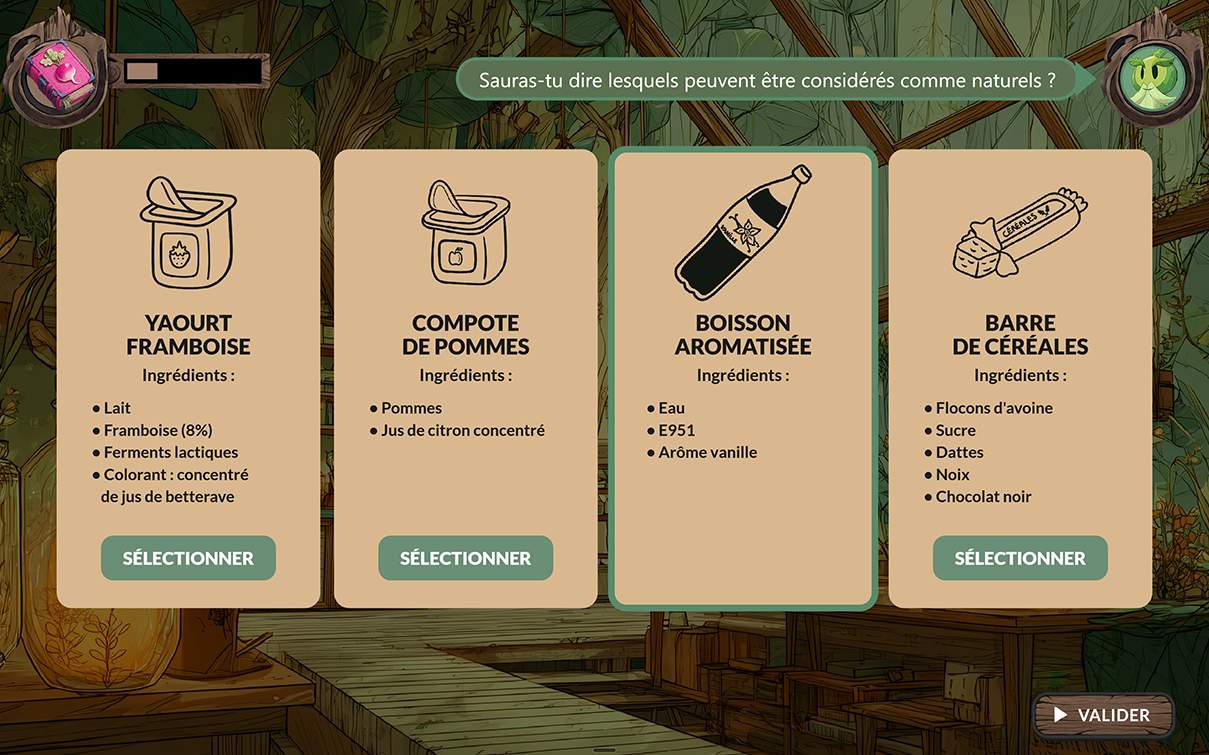
Art direction and user experience
The illustrations were produced with generative AI, framed by a tightly defined art direction, in order to achieve a rich and consistent world: a light, ludic and refreshingly unfamiliar atmosphere. Every interaction is designed for one-finger use, dialogue texts are kept concise to suit reading on a tablet and the pace of a visit, and dialogues can be sped up with a single tap.
The pages and recipes collected appear automatically in the notebook at the end of each trial: immediate visual feedback that fuels the urge to complete the collection and carry on with the adventure.
Da Viking Code handled the entire chain: concept and game design, writing of the scenario and dialogues, art direction, creation of the world and its characters, UI/UX and full development of the experience.
If you would like to develop a serious game, our teams can support you on writing the specifications, on ideation, design and production of your project. Get in touch to talk it through with us.